01A Different Kind of Horror
Adapted, loosely, from Michel Faber's 2000 novel, Under the Skin follows an unnamed alien — embodied by Scarlett Johansson — who drives a transit van through Glasgow, luring men off the street and into an enclosing black void. That synopsis barely touches the experience of watching it. Glazer, working with cinematographer Daniel Landin and composer Mica Levi, constructs a film that operates more like a sensory imposition than a narrative. You don't follow it so much as submit to it.
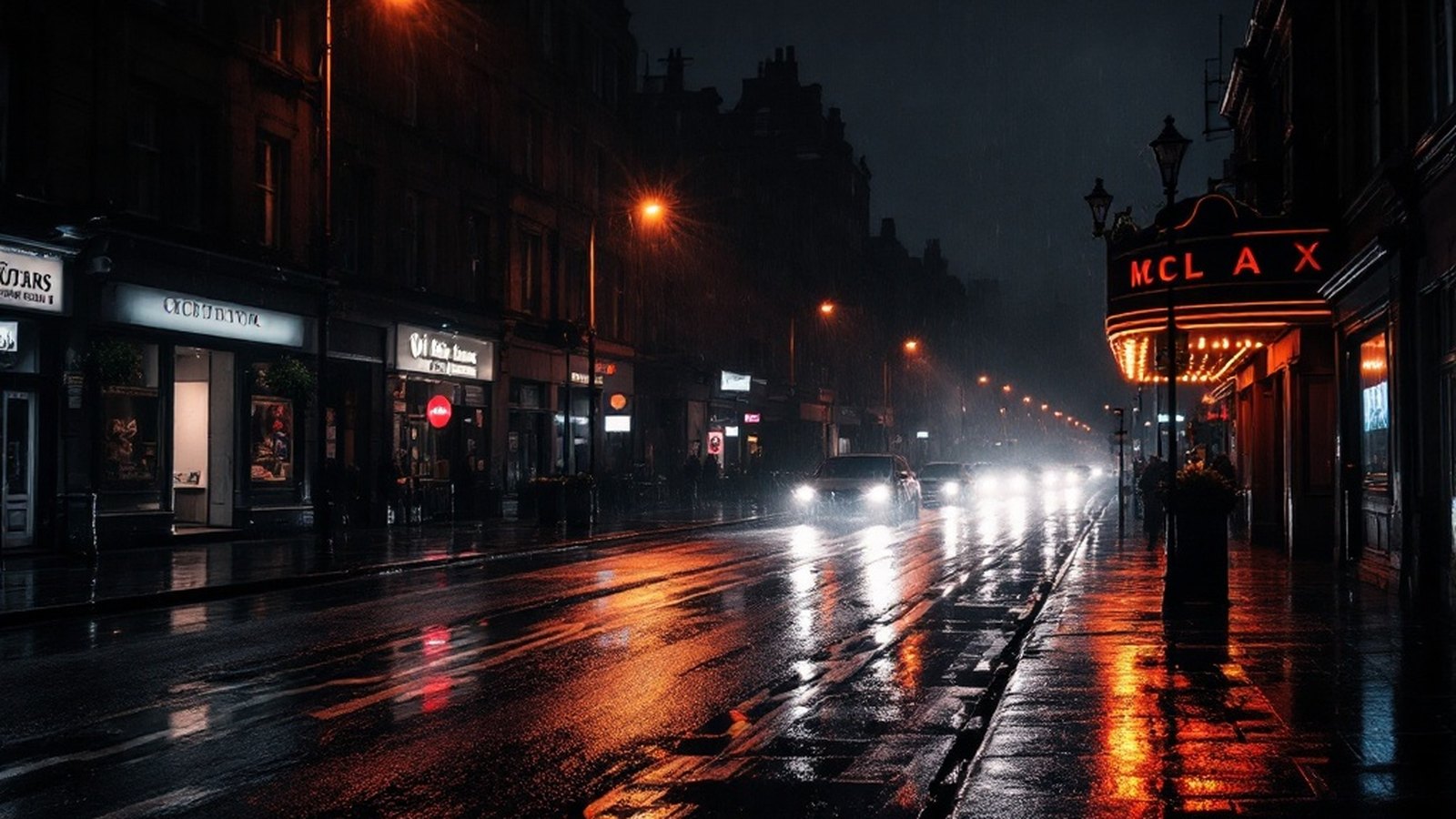
The production's central gambit was radical in its simplicity: put a globally famous actress in a plain van and film her talking to real, unsuspecting Glaswegians. Hidden cameras captured the encounters, and only willing participants were retained. The result is a film whose texture refuses to settle — you can never quite locate the line between document and fiction, between the real city and the constructed dread. Glasgow, frequently wet and grey and unheroic, becomes genuinely alien territory. The M8, a Tesco car park, the Clyde shopping centre — all rendered as if seen from the wrong distance.
02The Formal Achievement
What Glazer and Landin achieve tonally is remarkable. The locked-off, static compositions in which men descend into black liquid have become justly iconic — visually minimal, cosmically horrible. Levi's score is one of the great British film soundtracks of the 21st century: strings scraped into shapes that suggest neither comfort nor genre, a sound that makes familiar images feel wrong. These sequences were painstaking to realise, yet they never feel laboured. They remain among the most unsettling things committed to a screen.
The film premiered at the Venice Film Festival in 2013 before a limited theatrical release the following spring — a slow, specialist rollout that suited its nature precisely. It was never going to anchor a multiplex weekend. Distributed by StudioCanal in the UK, it found its real audience gradually, through rep screenings and home viewing, the kind of slow cultural absorption that the best strange films require. That audience has continued to grow.
03Why It Lasts
Johansson's performance is essential and, at the time, undersold. She gives almost nothing recognisably actorly — no interiority on display, no legible emotion — and this withholding is the performance. The shift in the film's second half, as her alien begins to register something like curiosity and then vulnerability toward human experience, is all the more affecting for how little it announces itself. There's a scene on a beach at a Scottish sea loch — shot near Lochaline in Morvern — that carries a specific, oblique horror unlike almost anything else in British cinema of its era.
The film arrived at a moment when British cinema was producing formally adventurous work — Aftersun would follow nearly a decade later in a similar spirit of quiet formal audacity — but Under the Skin remains the more radical object: colder, stranger, more committed to its own alienation. It trusts its audience to sit inside genuine discomfort without the reassurance of explanation.
At ten years' distance, it becomes clearer that Glazer made something categorically unusual: a film that used the specific textures of a real British city — its light, its accents, its ordinary high streets — and turned them into the surface of another world. Scotland has never looked less familiar, or more itself.
The names to know
Jonathan Glazer
British director of Under the Skin, previously Sexy Beast and Birth
Scarlett Johansson
American actress playing the unnamed alien lead
Mica Levi
British composer of the film's acclaimed score
Daniel Landin
cinematographer on Under the Skin
Glasgow
principal filming location; real streets, real people, hidden cameras
Lochaline/Morvern
remote Scottish location for the sea-loch beach sequence